What needs checking?
A visible change, a gap width and a fitting dimension are different jobs. Start with the question.
One photograph is a moment.
Keep coming back, and it becomes a story you can check.
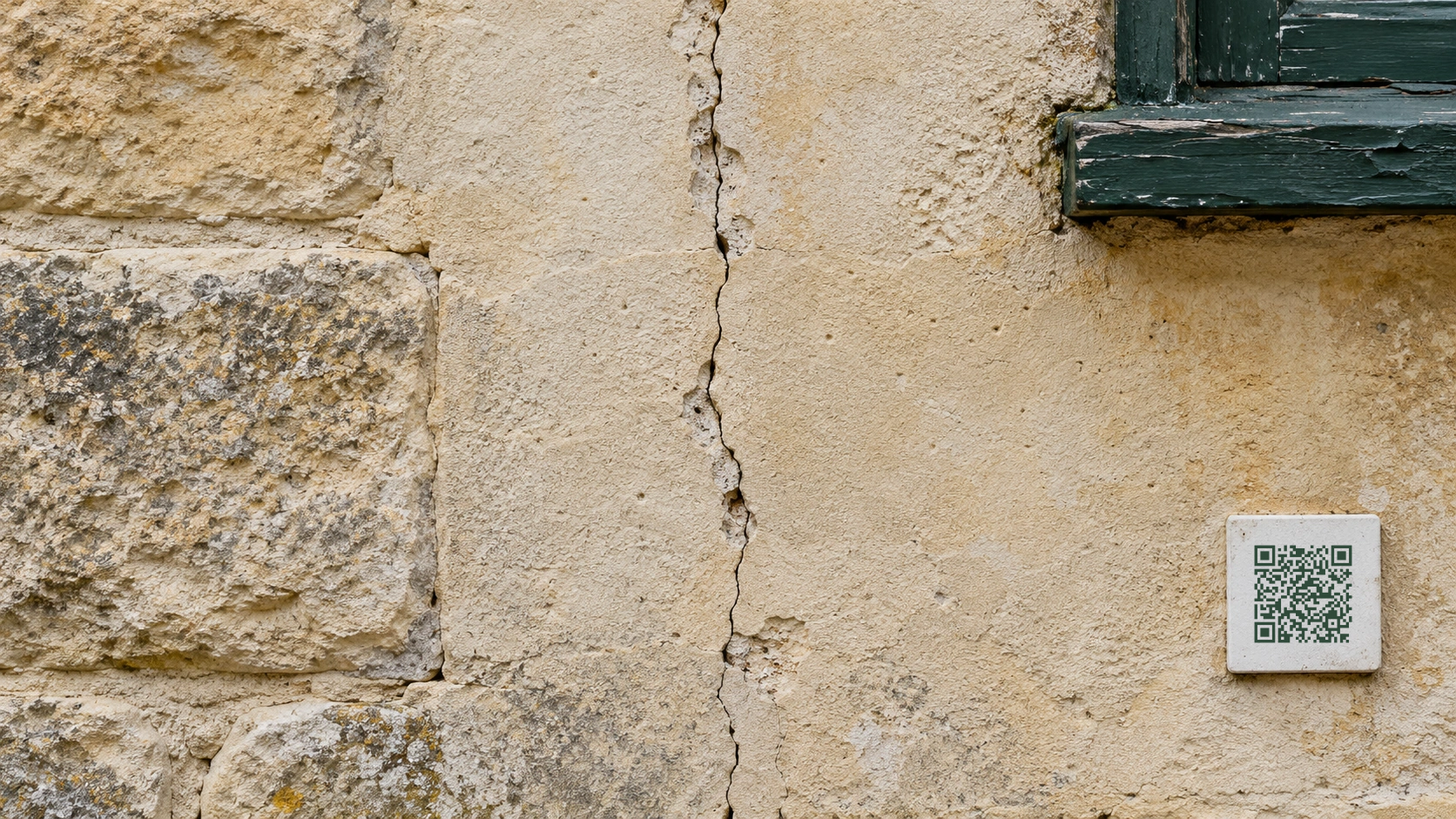 ILLUSTRATIVE REFERENCE / NOT A CALIBRATED TARGET
Give the place its own record. A tile makes that record easy to open and helps people return to the same point.
A printed QR is a doorway. A reference made for measurement is chosen separately, for the detail you need to check.
See the tile options ↗
Light, distance and camera angle can make the same wall look different. Start by checking whether the views belong in the same comparison.
This moves one generated photograph. It shows the idea; it does not align customer photographs.
Keep the place, dates, observations and readings together. A result should lead back to the record it came from.
Keep unanswered questions there too. A wider gap gives someone a reason to look closer; it does not explain the cause.
Open an example record ↗Choose an example.
See what it can and cannot tell you.
Some changes are hard to remember. Others need more than a photograph.
Repeat the same view. Compare a stain, a paint edge or a surface mark.
Moisture inside a wall, a temperature difference or a very fine dimension needs suitable equipment and a checked method.
Dry rot, the cause of damp and structural safety need the appropriate investigation. Keep that finding with the same place.
The tile identifies the place. The reference, equipment, lighting, viewpoint and uncertainty are chosen for the actual question. This website demonstrates the workflow; it does not process or diagnose your building.
Historic England: investigating damp ↗A visible change, a gap width and a fitting dimension are different jobs. Start with the question.
Choose a suitable reference and equipment. Check them against something known before relying on the result.
Keep the conditions, limits and missing observations with the finding. Ask the right person to assess what it means.
We agree the place, access, recording method, review and output before work starts.
Your enquiry is saved in the shared private request system. No payment is taken.Keep the original, the place and the visit.
Agree who checks the evidence and who can see it.
Use suitable views and references for the agreed question.
Keep a clear history for the next visit.